How to specify nursery tree height, girth and container size
Write clearer nursery specifications for height, girth, crown form and root systems. Reduce ambiguity when comparing landscape plant quotations.
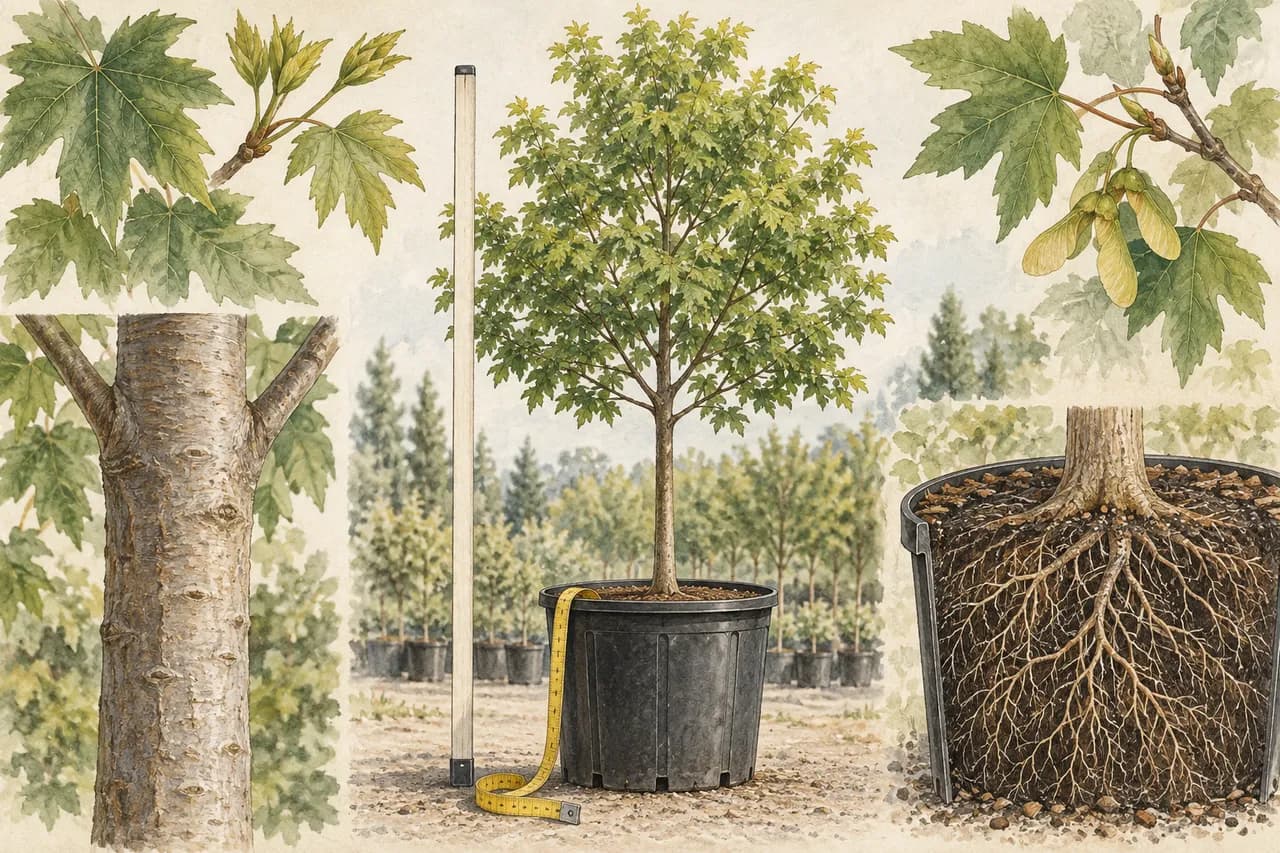
A “two-metre tree” is not a complete specification for a professional plant order. The measurement starting point, stem form and root presentation can all change what that description means. The aim is not to ask for the longest possible list of dimensions. It is to make the project's acceptance criteria clear enough for the supplier and receiving team to check in the same way.
Separate height, girth and diameter
Plant height, trunk girth and trunk diameter describe different dimensions. Give each its own field and unit. Confirm the height at which girth is measured, and distinguish centimetres from metres. If a project refers to a measurement standard, supply that document so both parties can interpret the specification consistently.
State whether the design requires a single stem, multiple stems or branching from a lower point. A single trunk measurement may not describe the intended appearance of a multi-stem plant.
Make crown form part of the brief
An entrance avenue may need trees with similar crown width, while another location may require a clear stem for pedestrian access. Describe crown width, branching position and overall form alongside photographs. Words such as “large”, “full” or “standard” should not be the only acceptance criteria.
Ask for the plant reference and a measurement reference in the same photograph where useful. Camera perspective can distort apparent height, so use photographs together with written dimension confirmation. The two forms of evidence serve different purposes.
Record root presentation separately
Container volume and external pot diameter are not interchangeable. If volume is given in litres, establish which container it describes. For rootballed stock, discuss ball dimensions, wrapping and handling requirements separately. The same shorthand may not suit both deciduous trees and conifers.
A large container is not by itself proof of root quality or successful establishment. Assess the plant and its root system together when checking the proposed batch, and record any project-specific acceptance requirements before ordering.
Build one reusable schedule line
The following is a quotation template, not a stock offer:
- Item code: a unique project reference.
- Botanical name and cultivar: the full specified identity.
- Quantity: the requirement for this phase.
- Height range: with unit and measurement starting point.
- Stem: form, girth and measurement height.
- Crown: width or agreed visual specification.
- Roots: container volume or rootball details.
- Tolerance: accepted range and substitution approval.
Carry the same code through the quotation, batch labels and receiving checklist. That gives the nursery, transport coordinator and site team a shared reference. It also makes an approved change easier to trace than a series of informal descriptions in separate messages.
Frequently asked questions
Can height be used as a substitute for age?
Do not infer age from height alone. Species, growing conditions and production methods differ. If age matters to the project, ask for it separately.
Is it acceptable to specify a size range?
Yes, provided the range matches the project and is clearly agreed. The quotation and receiving team should use the same acceptance limits.