Container-grown or rootballed trees: choosing a supply format
Compare container and rootballed nursery stock through site access, handling, delivery and specification. A practical guide for project plant buyers.
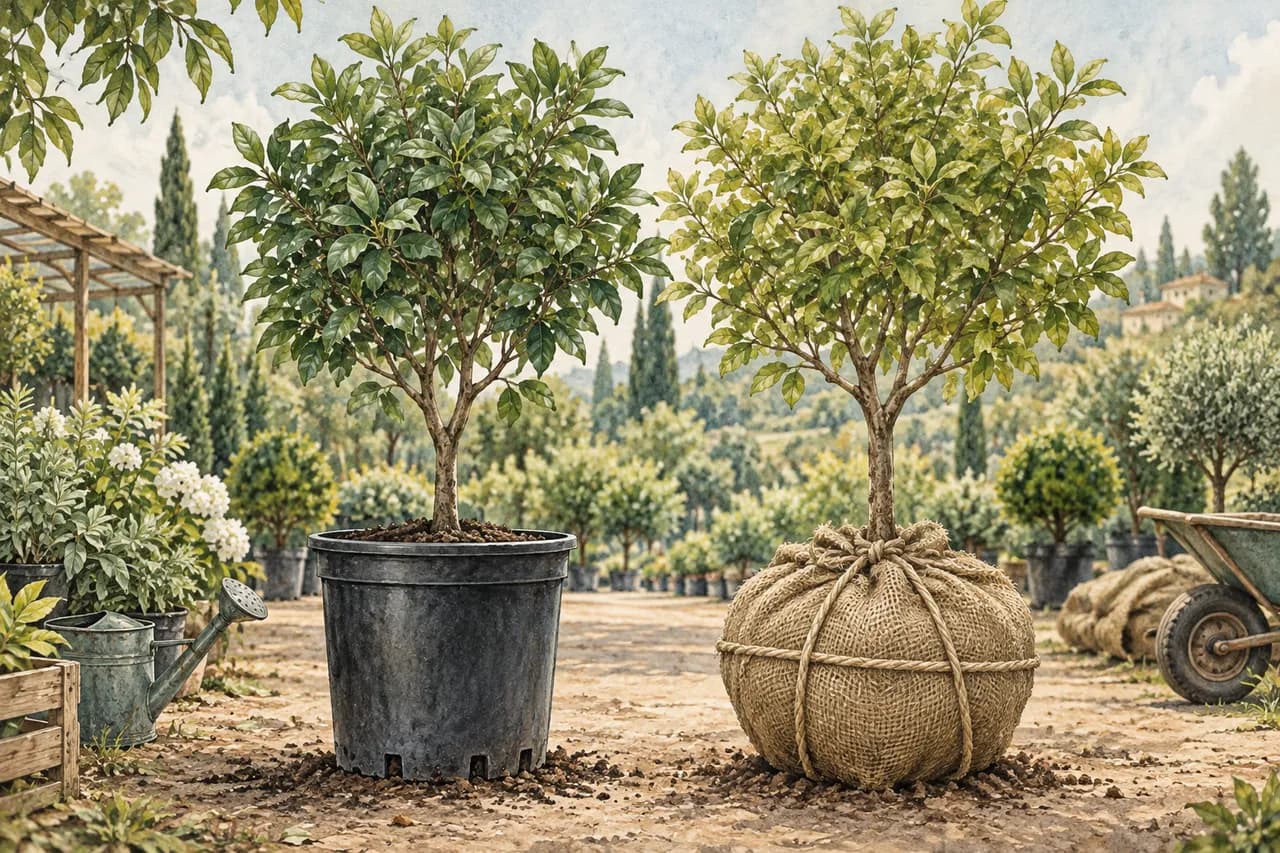
Choosing between container-grown and rootballed trees involves more than the plant's appearance. Site access, planting dates, unloading arrangements and holding space all affect the decision. There is no single format that is best for every project. This guide gives purchasing and installation teams a shared set of questions before they compare offers.
Understand what the descriptions cover
Container stock is supplied in a pot, while rootballed stock retains a prepared mass of soil around its roots. Buying decisions should consider root and crown condition, suitability for the site and the seller's terms together. The RHS buying guide likewise treats size as only one part of plant selection.
Ask what the supplier means by the description in the offer. The preparation history of a potted plant or the protection of a rootball may not be clear from a photograph. Request a written explanation and current batch images where these details matter to the project.
Make the decision around site constraints
- Will the plants be installed immediately after unloading?
- If they must wait, who is responsible for care?
- Are there narrow gates, slopes or transport restrictions?
- Is handling equipment suitable for the load and root presentation?
- Does the planting team's schedule match the delivery window?
Buying the apparently cheaper option before answering these questions can create extra movement or holding work on site. Have competent personnel plan plant handling and equipment use. An online sourcing guide is not an operating instruction for lifting heavy stock.
Compare equivalent offers
Even where species and height match, crown form, root presentation, preparation and delivery point may differ. Put each of those details in a separate comparison column. If packaging and loading are included in one offer and excluded in another, do not interpret the entire price difference as a difference in plant value.
After selecting candidates from the catalogue, confirm the available supply format and suitability of the requested size. A catalogue photograph may not show the root presentation or dimensions of the batch proposed for your order.
Prepare order and receiving notes together
The order note should state root presentation, size range, target dispatch period and batch acceptance method. The receiving note should cover counting, label matching, visible damage records and holding arrangements. Share both in advance if different teams place the order and receive the plants.
If a container or rootball shows a visible issue, photograph it with a link to the shipment record and contact the responsible party promptly. This visual record does not replace an official plant-health inspection. It provides a consistent account of what arrived and what the receiving team observed.
Frequently asked questions
Can container plants be installed in any conditions?
Being supplied in a container does not make every weather or soil condition suitable. Local conditions and aftercare preparation still need assessment.
Are rootballed plants always cheaper?
There is no useful universal price rule. Compare current quotations for equivalent specifications and delivery scope.