Choosing conifers for screening: a landscape buyer's guide
Plan conifer screening around mature width, site conditions, maintenance and privacy goals. Prepare a clearer plant enquiry for landscape boundaries.
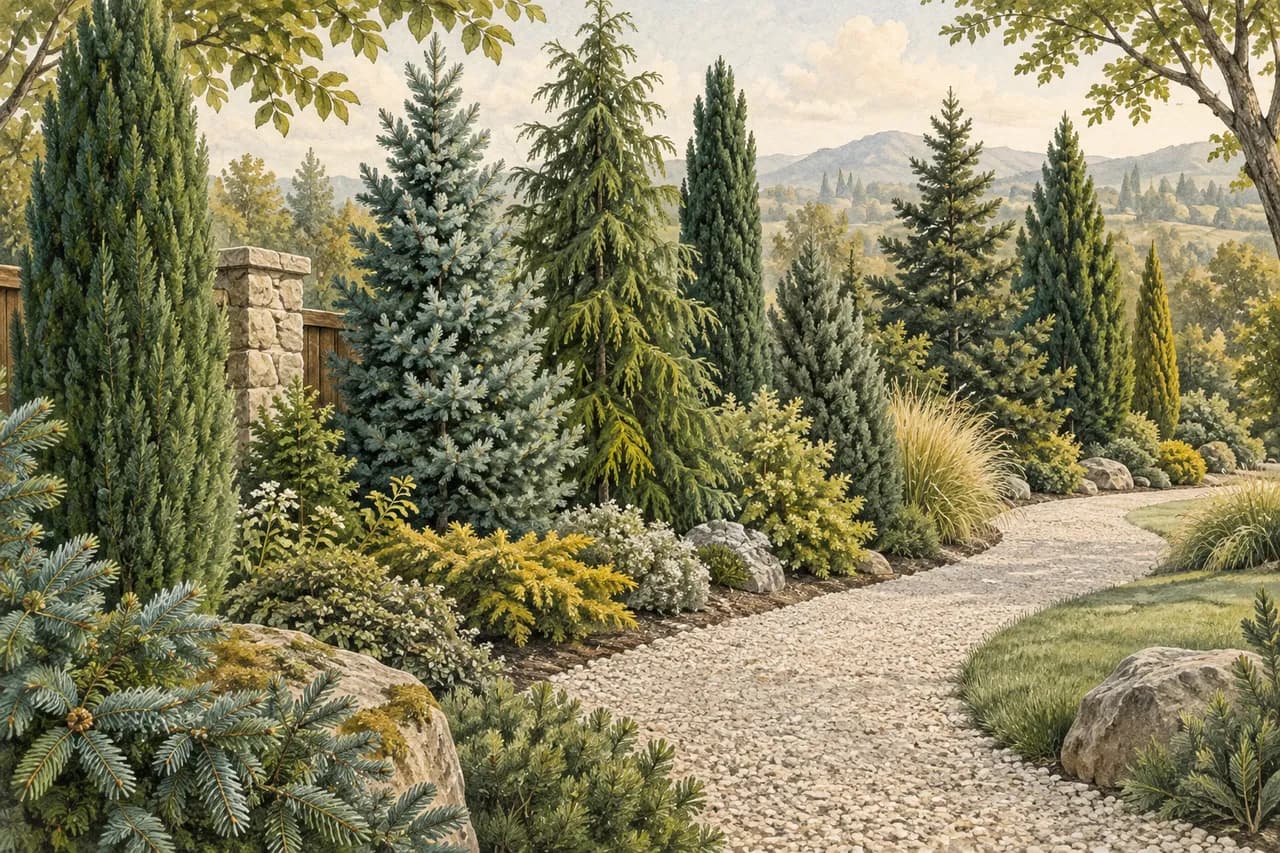
A buyer planning a planted boundary often starts by asking which plant will close the gap fastest. A better first step is to define what needs screening, at what height and in which seasons. Conifer selection belongs alongside the available width, local climate, maintenance resources and the time allowed for the planting to develop.
Define the screening function
Reducing views from a neighbouring plot, separating a car park and designing a windbreak are different jobs. Mark the sightline height, screening length and available planting width on a simple plan. Keep visibility and access requirements at entrances, gates and junctions part of the brief.
Explain whether the project needs an immediate visual effect or can allow a planting scheme to develop. Selecting only by delivery height can overlook the space the mature plants will eventually occupy.
Consider plant identity and spacing together
Species and cultivars differ in their eventual dimensions. Hedge selection should account for mature size and the intended maintenance style; evergreen plants can provide continuing visual cover. These general principles appear in Iowa State's hedge guidance, but its local species and planting calendar should not be transferred unchanged to another climate.
Use the conifer catalogue as a shortlist. Do not derive spacing from a photograph alone. Ask the landscape designer for a layout that takes expected mature width and pruning arrangements into account.
Include site information in the enquiry
- Delivery and planting location, with elevation if known.
- Sun exposure, wind and the influence of nearby structures.
- Available soil and drainage information.
- Width allocated to plants and nearby services.
- Required delivery size and eventual screening objective.
- Resources for irrigation and pruning.
Send a site photograph and sketch with these details. If a uniform row is required, specify the acceptable size range and form rather than only the total number of plants. Give the supplier a clear way to identify acceptable alternatives.
Allow for maintenance and replacement
A planting row should not prevent access to a fence, irrigation system or service point behind it. Consider staff access and the possibility of replacing an individual plant while the scheme is being designed. If a mixed planting is proposed, reflect the different size and maintenance requirements in the plant schedule.
A useful screening enquiry therefore goes further than asking for the fastest-growing plant. Defining function, space and maintenance capacity gives the buyer and supplier a more practical basis for comparing candidate plants and offered specifications.
Frequently asked questions
Is every conifer suitable for a hedge?
No. Mature dimensions, form, site conditions and maintenance expectations matter. Assess the particular species and cultivar.
Can I use one spacing for every plant?
Avoid a universal spacing rule. The design, expected plant development and maintenance plan should be considered together.