Sourcing ornamental plants from Turkey: an international buyer's guide
Prepare an export enquiry with a plant schedule, destination and delivery scope. Understand the checks to discuss before sourcing ornamental plants from Turkey.
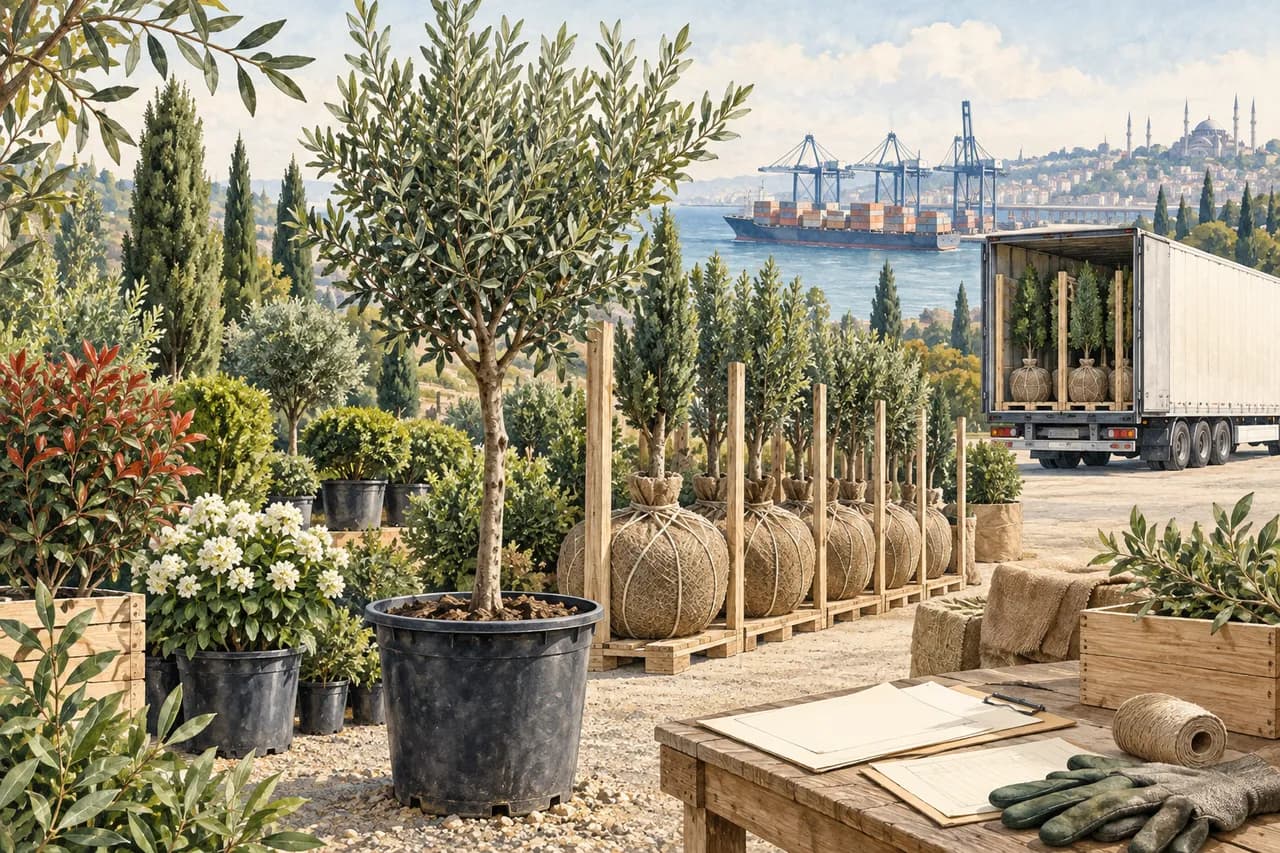
For an international buyer sourcing ornamental plants from Turkey, an early question is whether the selected species and growing medium are acceptable at the destination. Pricing and transport planning should proceed alongside that assessment. Kale Botanik handles export enquiries, but no buyer should assume every plant can be shipped to every country. This guide explains what to prepare for a first discussion and which responsibilities need to be agreed.
Name the destination in the first enquiry
A request for an “export price” is incomplete without a country, city, proposed point of entry where known, botanical names, quantities and root-system details. If the importer and landscape contractor are separate businesses, identify who will reconcile the technical schedule with delivery requirements.
Import rules vary by product and destination. The IPPC directs questions about imports, exports and phytosanitary certificates to national plant protection organisations. Confirm current admissibility, permissions and restrictions with the relevant official authorities. A phytosanitary certificate should not be assumed to satisfy every import requirement on its own.
Match the commercial offer to the plant schedule
Give each line a reference code. Put botanical name, cultivar, height, girth, container or rootball details and quantity on the same line. If the buyer uses a particular measurement standard, share it with the supplier. Abbreviations used in different markets should not be treated as equivalent without explanation.
The current catalogue can support an initial selection. Request batch photographs, confirmed dimensions and dispatch readiness separately. Establish whether an image represents the actual proposed batch or is an example of the plant type.
Assign document and logistics responsibilities
- Who checks plant admissibility and required official inspections?
- Who manages import permissions and destination procedures?
- Who arranges packing, loading and transport?
- What happens to the plants if the journey is delayed?
- Who provides unloading equipment and checks the delivery?
Read a delivery term together with its named place. The inclusion of freight does not by itself establish that every border, terminal or local charge is included. Reconcile responsibilities in the agreement with the appropriate trade and plant-health advisers.
Use approval stages before dispatch
A practical sequence is an initial plant list, admissibility review, technical quotation, batch confirmation, document preparation, shipment plan and delivery inspection. Assign a responsible person to each stage. If a species or quantity changes, revisit the earlier checks as well as the quoted price.
Distinguish the preferred arrival window from the project's latest acceptable date. This gives the parties a clearer planning brief than a single unexplained deadline. Do not rely on fixed transit promises or assumed customs outcomes before the route and official procedures have been checked for the actual consignment.
Frequently asked questions
Can one plant list be supplied to every country?
Admissibility must be assessed for the destination, species and form of supply. Conditions applying to a previous shipment do not automatically apply to a new order.
What should I send with my first enquiry?
Start with a clear plant schedule showing species, dimensions, quantities and timing, together with the destination country and city. Additional document requirements can then be discussed.